As an Amazon Associate, we earn from qualifying purchases.
A good electric kettle gives pour-over coffee drinkers more control than a stovetop model. A narrow gooseneck spout produces a slow, steady stream, while adjustable temperatures help match the water to the roast. Together, they support even saturation and controlled blooming.
Your ideal kettle depends on brew volume, space, and desired precision. This guide compares four practical kettle types and explains their capacity, materials, cleaning, safety, and measurement tradeoffs.
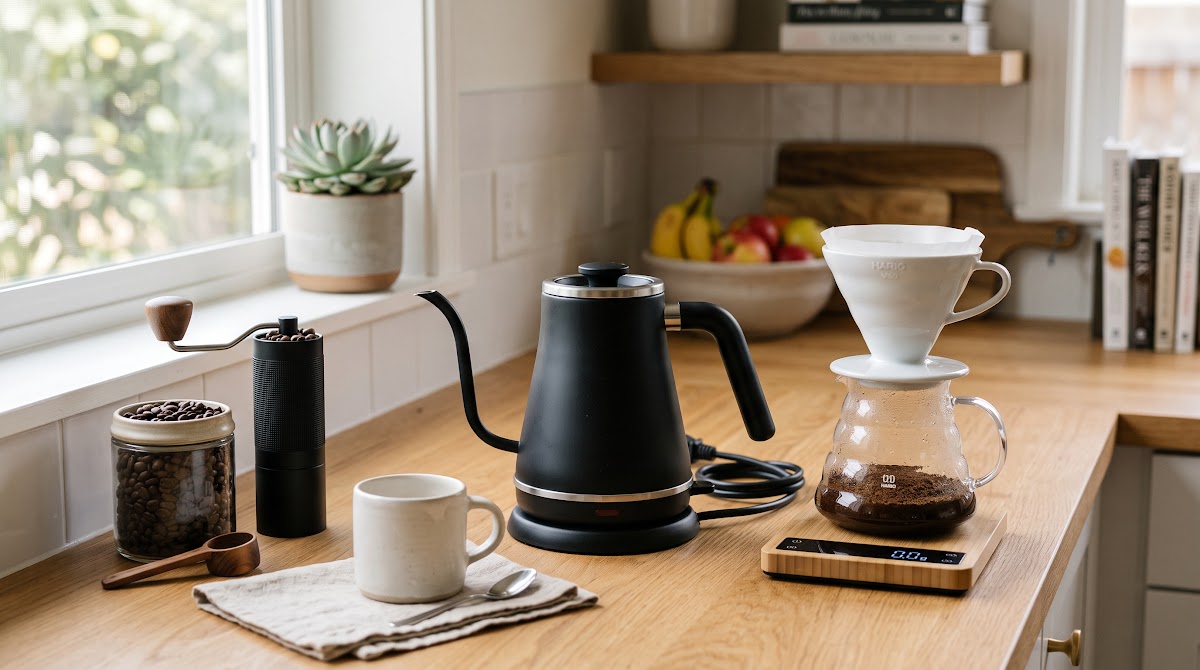
Table of Contents
- Quick Recommendations
- Comparison Table
- Best Overall
- Best Budget
- Best Premium
- Best Compact
- Buying Guide
- Frequently Asked Questions
- Final Verdict
Quick Recommendations
- Best Overall: A 0.9-liter variable-temperature gooseneck kettle balances flow control, capacity, and convenience.
- Best Budget: A 1.0-liter basic gooseneck kettle provides controlled pouring without advanced presets.
- Best Premium: A 0.9-liter precision kettle with hold mode suits users who adjust recipes or brew several rounds.
- Best Compact: A 0.6-liter mini gooseneck kettle fits small kitchens, offices, dorms, and one-cup routines.
For most households, the variable-temperature option handles different roasts without occupying much space. The budget version makes sense when accurate pouring matters more than digital controls. Experimenters may appreciate hold mode; occasional brewers can skip it.
Comparison Table
| Category | Generic Variant | Capacity | Temperature Control | Best Fit |
|---|---|---|---|---|
| Best Overall | Variable-temperature gooseneck kettle | 0.9 liter | Adjustable | Daily pour-over brewing |
| Best Budget | Basic gooseneck kettle | 1.0 liter | Boil-only | Simple, affordable routines |
| Best Premium | Precision hold-temperature kettle | 0.9 liter | Adjustable with hold mode | Recipe-focused enthusiasts |
| Best Compact | Mini gooseneck kettle | 0.6 liter | Basic or adjustable | Single servings and small spaces |
Best Overall
0.9-Liter Variable-Temperature Gooseneck Kettle
This versatile kettle suits a daily pour-over routine. Its 0.9-liter vessel serves one large brewer or two smaller cups while remaining easy to lift. Favor a stable base, clear display, intuitive buttons, and markings visible during filling.

Why It Works for Pour-Over Coffee
Variable control lets you choose water below boiling when needed. Light roasts often suit hotter water; darker coffee may taste smoother at lower settings. The gooseneck should maintain a narrow stream as you move from the center of the coffee bed toward its edge, without pulsing or sudden surges.
Capacity, Size, and Materials
Including its handle and base, a 0.9-liter kettle may need 8 to 12 inches of counter space. Measure beneath cabinets and leave room for lid removal. Steel interiors resist odors; plastic windows show levels but may stain. A wide opening simplifies hand cleaning.

Pros
- Supports different roasts and brewing recipes.
- Balances capacity with manageable pouring weight.
- Encourages controlled circular pours.
- Digital controls improve repeatability.
Cons
- Costs more than a boil-only kettle.
- Controls require some familiarization.
- A crowded handle or display may feel awkward.
Choose this style if you brew several times weekly and want control without excessive features. It suits households rotating beans or grind settings. Before buying, check whether your chosen temperature remains selected after the kettle is lifted from its base.
Best Budget
1.0-Liter Basic Gooseneck Kettle
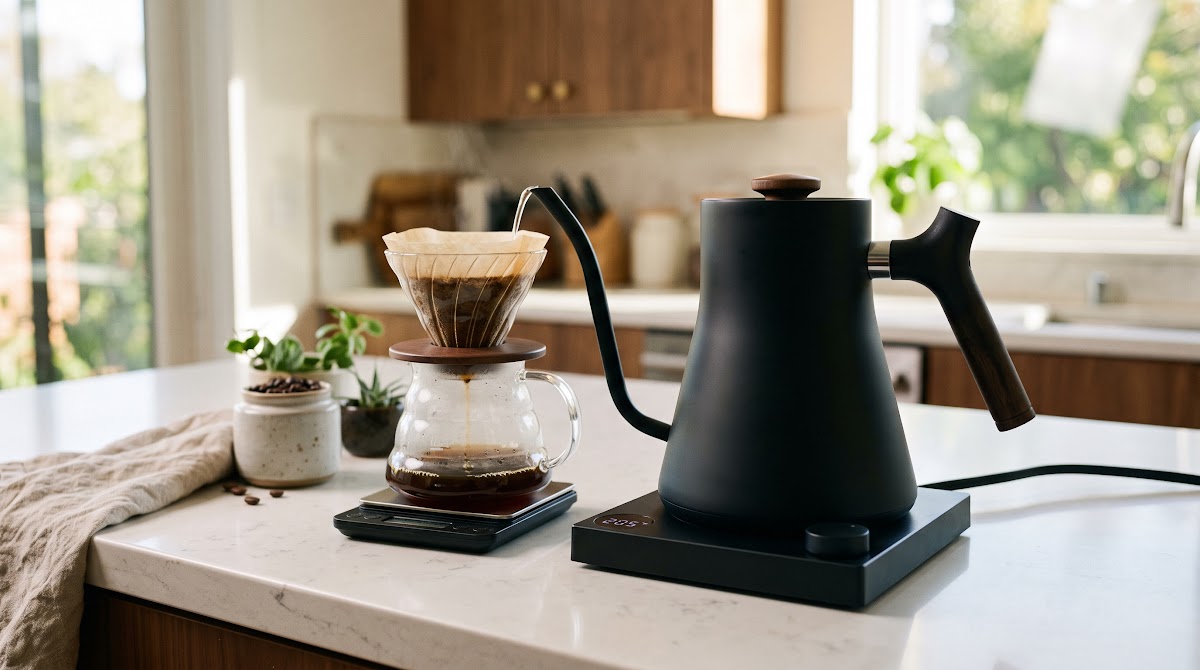
A basic gooseneck kettle focuses on heating water and directing it accurately. Most use one switch instead of a temperature panel. Its 1.0-liter capacity can rinse a filter, preheat a dripper, and brew multiple mugs.

Simple Controls and Daily Use
Fill above the minimum line, place the kettle on its base, and activate the switch. Automatic shutoff should stop heating after boiling. For cooler water, wait briefly or use a thermometer. Repeat the same cooling interval when comparing brews.
Pouring and Construction Tradeoffs
Seek a narrow spout and a handle that keeps your wrist neutral. A fast stream can disturb the coffee bed, while an overly restricted one makes larger batches tedious. Stainless steel is durable, although single-wall exteriors can become hot. Lid stability also matters when the kettle is tilted deeply.
Pros
- Costs less than adjustable-temperature models.
- Simple switch suits multiple household members.
- One-liter capacity covers common brewing needs.
- Fewer settings can simplify maintenance.
Cons
- No direct final-temperature control.
- Flow quality varies among designs.
- Exterior metal may remain hot.
This type suits simple recipes and brewers willing to use a thermometer or cooling period. Ensure the lid fits securely and the handle provides adequate clearance from the body. Confirm that the switch and water-level marks are visible from your normal filling position.
Best Premium
0.9-Liter Precision Hold-Temperature Kettle
A premium precision kettle adds fine adjustments, a temperature display, and a hold mode that maintains the selected setting. They help when dialing in coffee, brewing consecutive cups, or pausing after rinsing. Its value lies in workflow convenience rather than guaranteed flavor improvements.

Temperature and Flow Control
Seek intuitive adjustments and a display readable from your usual position. A responsive gooseneck should allow a gentle bloom and faster main pour without sputtering. A counterbalanced handle can reduce wrist strain, although grip comfort is personal. Test the balance when possible, especially if your hands are small.
Hold Mode and Workspace Needs
Hold mode helps with back-to-back cups but consumes electricity and should not replace attention. Check whether it cancels when the kettle is lifted or resumes after return. Measure wide premium bases and keep cords away from water and heat. An automatic timeout prevents indefinite operation.

Pros
- Fine adjustments support repeatable recipes.
- Hold mode limits reheating between brews.
- Balanced construction may improve comfort.
- Visible feedback tracks heating progress.
Cons
- Higher cost may not benefit occasional users.
- More electronics add complexity.
- Hold mode may run unnecessarily.
Select this category if pour-over is a frequent hobby and you compare temperatures, grinds, or pouring patterns. Examine the controls and warranty rather than assuming every premium-looking kettle offers equal usability. Useful refinements should shorten your routine, not add menus you rarely touch.
Best Compact
0.6-Liter Mini Gooseneck Kettle
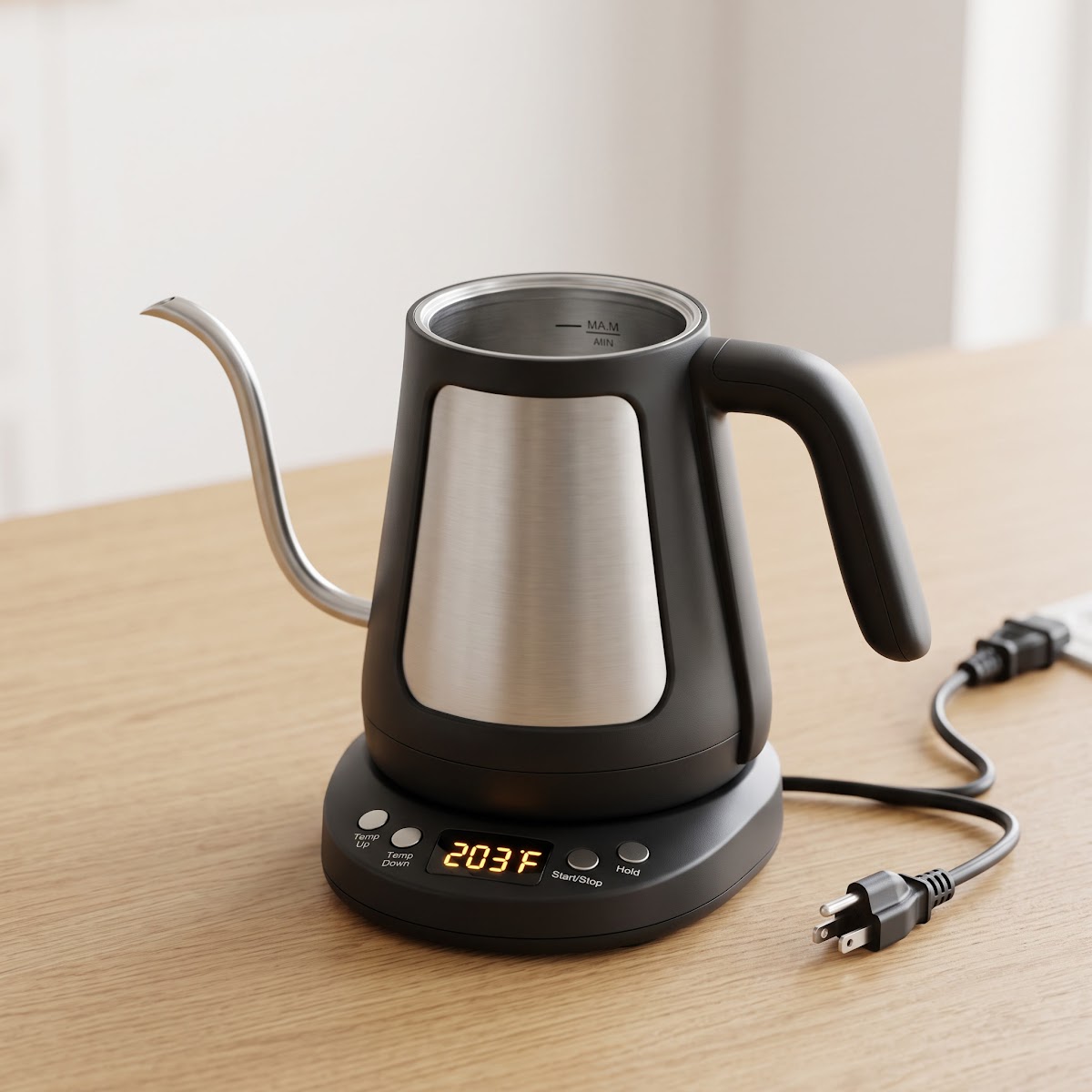
A mini kettle is designed for one-person brewing and tight counters. A 0.6-liter vessel generally rinses a filter and prepares one standard mug. Its lighter full weight can improve pouring comfort and make small flow corrections easier.
Small-Space Practicality
Compact models work well in offices, studios, recreational vehicles, or crowded coffee stations. Measure the full footprint, including handle and base. Check vertical clearance so the lid opens beneath shelving without moving the kettle. Cord storage further reduces clutter between uses.
Capacity and Brewing Limits
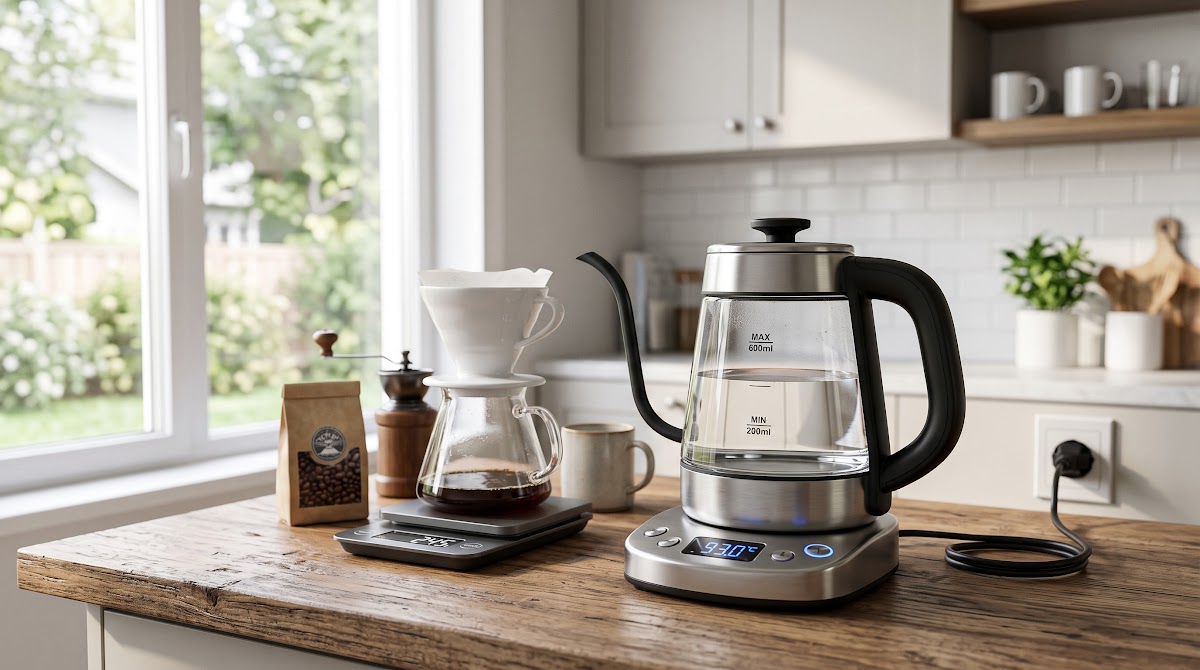
The reduced volume suits one dripper but not two large servings. Never exceed the maximum mark because boiling water can escape through the vent or spout. If your recipe requires 500 grams of brew water, also account for filter rinsing and heat loss. Usable capacity may be lower than the stated volume.
Pros
- Lightweight body is easy to guide.
- Occupies little counter space.
- Heats a modest single-serving quantity.
- Useful for travel with a suitable outlet.
Cons
- Capacity limits larger brewing sessions.
- Small handles may feel cramped.
- Advanced temperature controls are less common.
Choose a mini kettle when one-cup efficiency outweighs flexibility. Confirm voltage and wattage, use a level heat-resistant surface, and avoid extension cords unless the manufacturer permits them. Travelers should remember that a compact body does not automatically support every regional electrical standard.
Buying Guide
Choose a Spout for Controlled Flow
The gooseneck defines a pour-over kettle. It should start and stop cleanly, maintain a narrow stream, and respond predictably to angle changes. This control promotes even saturation. Reviews mentioning dripping, sputtering, or lid movement are often more useful than broad precision claims. Look for comments covering slow blooms and faster final pours.
Match Capacity to Your Recipe
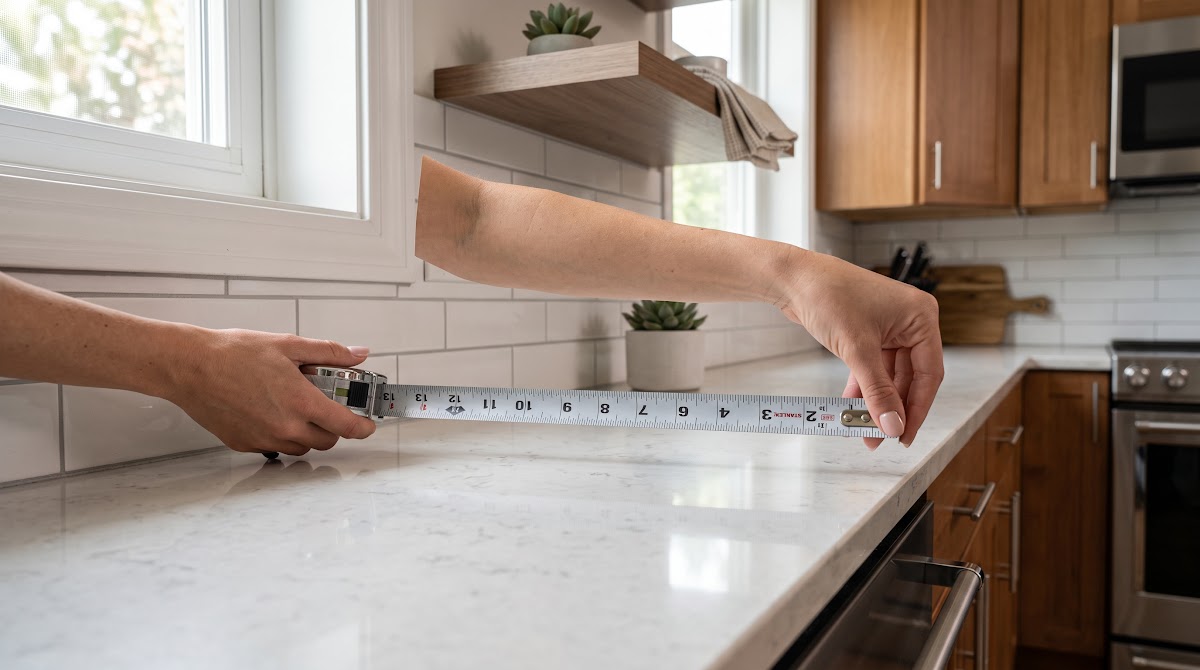
Add your brew water, filter-rinsing water, and a small reserve. A 0.6-liter kettle suits many single cups; 0.9 to 1.0 liter provides room for larger drippers or two servings. Extra capacity also increases weight and storage needs, so bigger is not automatically better. Compare usable fill limits rather than headline capacity.
Understand Temperature Features
Adjustable settings help with extraction experiments, but accuracy claims deserve caution without reliable documentation. Practical controls matter too: temperatures should be easy to change, the display legible, and the selected setting clearly shown. Hold mode adds value only when used regularly. Memory settings save time if you repeatedly brew at one temperature.
Compare Materials and Cleaning Needs
Stainless steel interiors are durable and easy to maintain. Glass reveals water levels but displays mineral deposits and needs careful handling. Plastic reduces weight and exterior heat, although some buyers prefer less water contact with it. Descale as instructed, rinse thoroughly, and never immerse the kettle or powered base. Avoid abrasive tools that scratch interior surfaces.
Check Safety, Placement, and Comfort
Prioritize automatic shutoff, boil-dry protection, a secure lid, and a non-slip base. Use a grounded outlet and route the cord away from counter edges. Compare complete dimensions with your space. Also consider full weight, grip shape, button placement, and whether steam vents away from your hand. Stable pouring matters more than decorative styling.
Frequently Asked Questions
Is a Gooseneck Electric Kettle Necessary for Pour-Over Coffee?
It is not essential, but it makes controlled pouring easier. A standard spout may release water too quickly and disturb the grounds. A gooseneck improves control over rate and placement, especially during blooming and pulse pouring. Fresh coffee and sound technique still matter more than any appliance. Careful brewers can make good coffee with simpler equipment.
What Capacity Is Best for One Cup?
About 0.6 to 0.9 liter works for most single-cup recipes, leaving room for rinsing and preheating without excessive weight. Check the minimum fill line as well as the maximum because some large kettles require more water than a small recipe uses. Your dripper size and rinse routine determine the practical minimum.
How Often Should an Electric Kettle Be Descaled?
Frequency depends on water hardness and usage. Descale when you notice mineral film, flakes, slower heating, or unusual noise. In hard-water areas, inspect the interior every few weeks. Follow the supplied cleaning method, empty unused water, and let the interior dry when practical. Regular inspection is more reliable than a universal schedule.
Should Water Be Boiling for Pour-Over Coffee?
Not always. Near-boiling water can suit many light roasts, whereas some darker roasts taste smoother with cooler water. Grind size, dose, brewer, and contact time also affect extraction. Begin with the roaster's guidance when available, then adjust one variable at a time by taste. Record successful combinations when repeatability matters.
Final Verdict
For most pour-over drinkers, a 0.9-liter variable-temperature gooseneck kettle offers the best balance of control, capacity, and convenience. It adapts to different coffees while remaining manageable during slow circular pours. Favor clear controls and a comfortable handle over features you will rarely use. Reliable flow and easy cleaning matter every day.
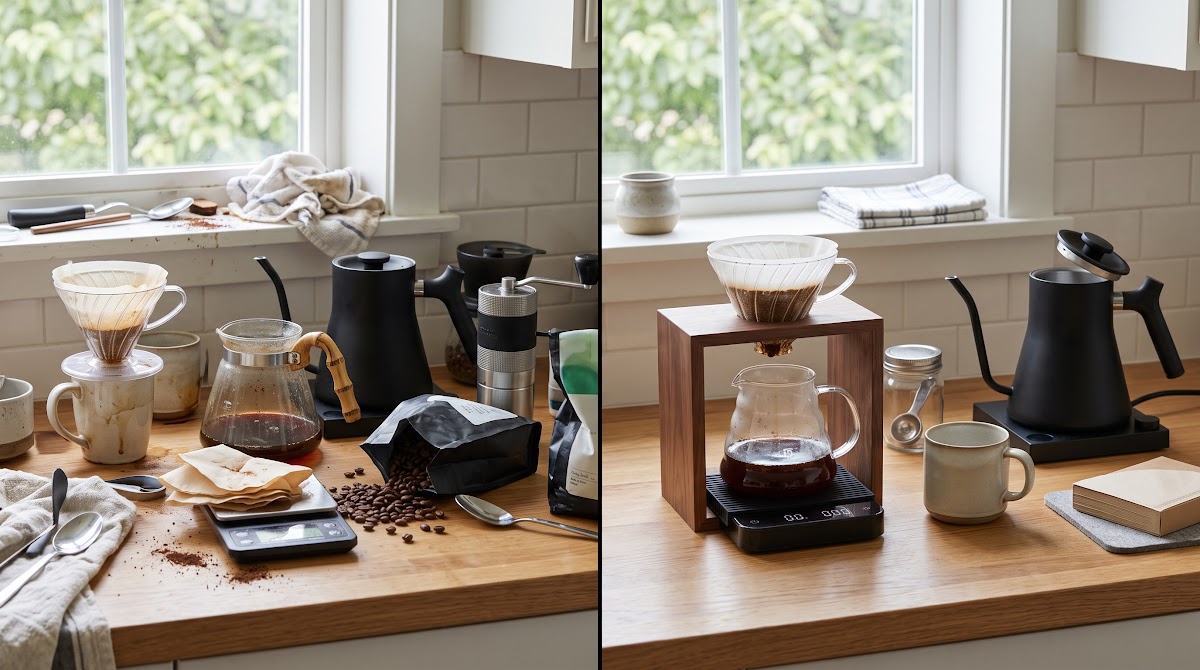
A basic 1.0-liter kettle is the value choice, while a precision hold-temperature version better supports frequent recipe testing. The 0.6-liter option suits one cup and limited space. Whatever you choose, verify its dimensions, minimum fill, safety features, materials, and cleaning instructions before purchasing.
0 comments:
Post a Comment