As an Amazon Associate, we earn from qualifying purchases.
A dependable rice cooker simplifies weekly meal prep by producing a large batch while you prepare vegetables, protein, or containers. The right design reduces monitoring and consistently prepares rice for lunches, dinners, grain bowls, and freezer-friendly sides.
This guide compares four generic rice cooker styles for different kitchens and routines. Recommendations consider capacity, footprint, controls, inner-pot materials, cleaning, storage, and safety rather than brands, models, or temporary prices.
Table of Contents
- Quick Recommendations
- Comparison Table
- Best Overall
- Best Budget
- Best Premium
- Best Compact
- Buying Guide
- Frequently Asked Questions
- Final Verdict
Quick Recommendations
Best Overall: Choose a 10-cup fuzzy-logic rice cooker if you prepare several portions and want programs for white rice, brown rice, mixed grains, porridge, and reheating. Its capacity and automatic adjustments support varied weekly menus.
Best Budget: A basic 6-cup one-touch cooker is ideal for straightforward white-rice batches. Its simple construction suits cooks who value convenience and do not need specialized programs.
Best Premium: Consider an 8-cup induction-heating cooker when texture, scheduling, and precise control matter. It costs more and uses extra space, but frequent rice eaters may appreciate its refined settings.
Best Compact: A 3-cup mini cooker works well for one person, a couple, a dorm room, or a small apartment. Its modest capacity prevents oversized batches, although serious meal preppers may need two cycles.
Comparison Table
| Category | Generic Variant | Capacity | Useful Features | Best Fit |
|---|---|---|---|---|
| Best Overall | Fuzzy-logic cooker | 10 cooked cups | Grain modes, timer, keep-warm | Families and varied meal plans |
| Best Budget | One-touch cooker | 6 cooked cups | Single switch, automatic warming | Simple rice-focused prep |
| Best Premium | Induction-heating cooker | 8 cooked cups | Even heating, scheduling, texture options | Frequent, detail-oriented cooks |
| Best Compact | Mini cooker | 3 cooked cups | Small footprint, removable pot | Singles, couples, limited counters |
Best Overall
10-Cup Fuzzy-Logic Rice Cooker Overview
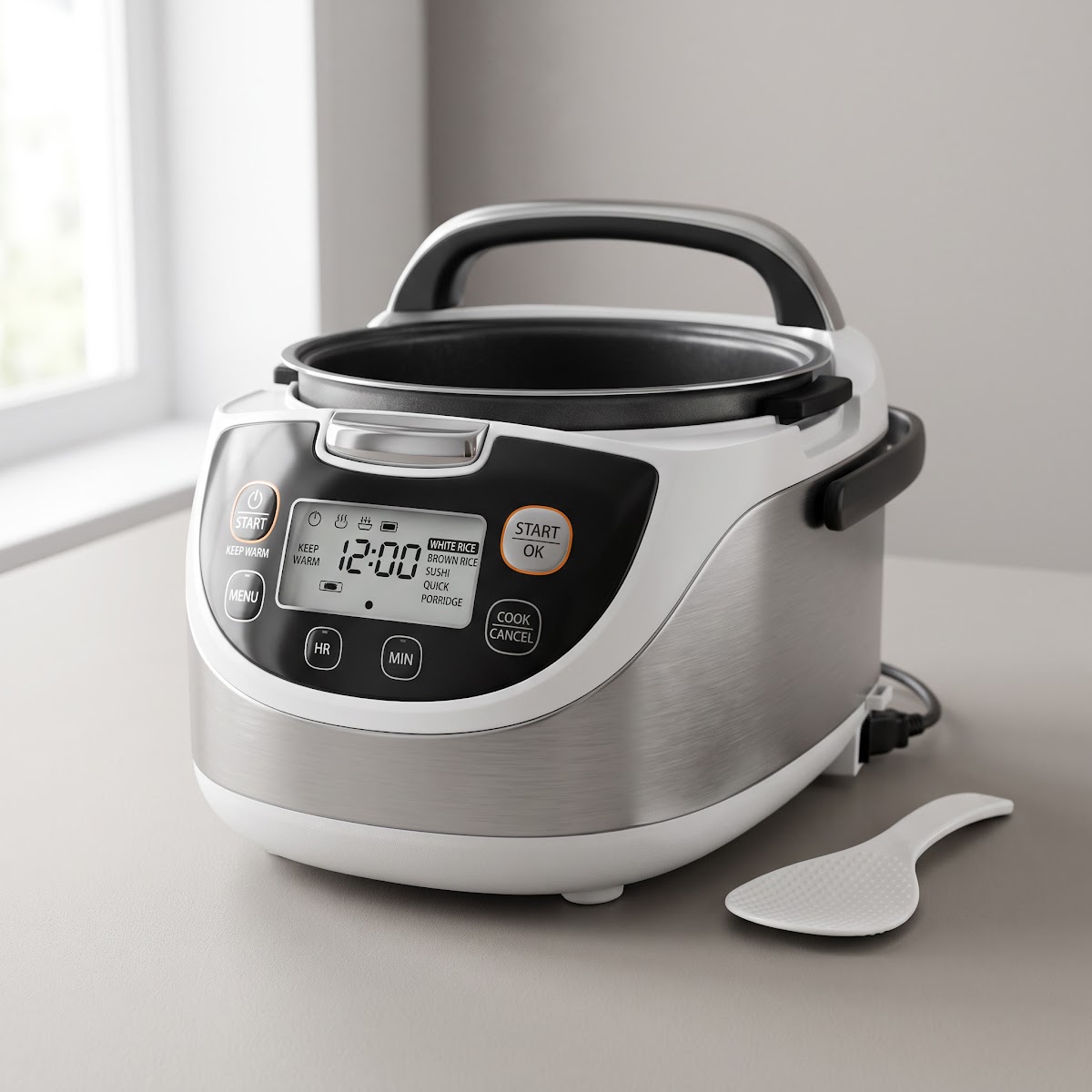
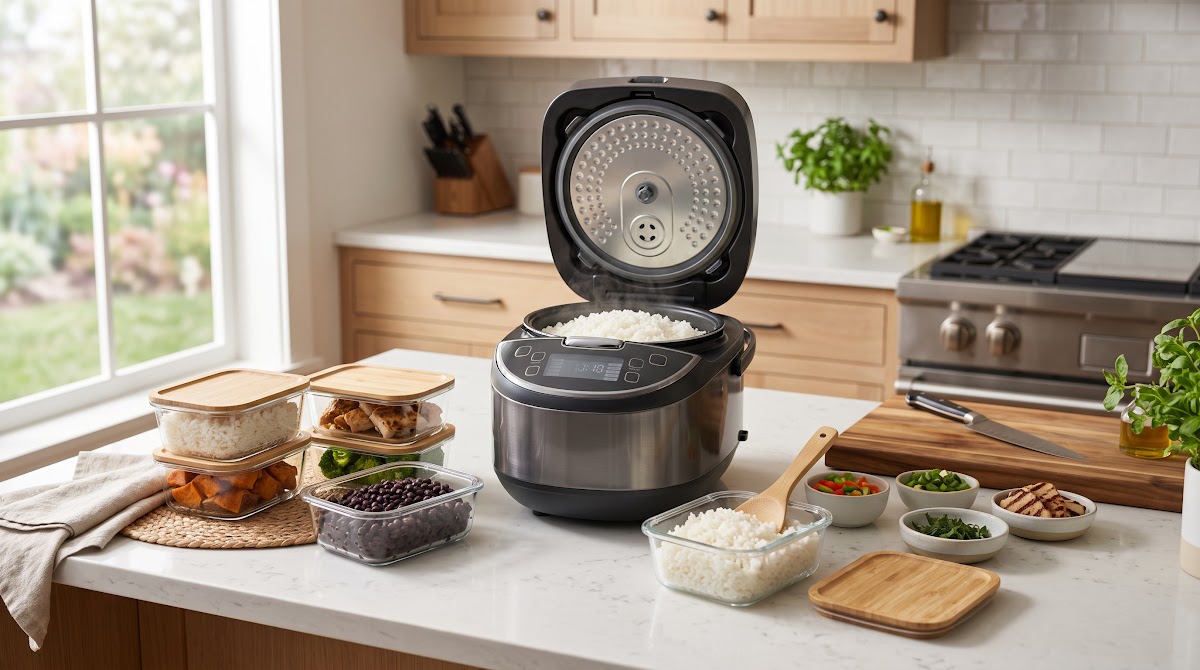
This versatile cooker is a balanced choice for weekly meal prep. A stated 10-cup cooked capacity fills several containers without requiring an enormous appliance. Fuzzy-logic controls adjust time and temperature when measurements or grain conditions vary slightly, helping during busy preparation sessions.
Check current 10-Cup Fuzzy-Logic Rice Cooker options on Amazon
Capacity and Meal-Prep Performance
Ten cooked cups provide roughly ten modest one-cup servings, although yield depends on the grain and supplied measure. That can cover a family dinner plus lunches or a week of bowls for one or two adults. Leave space below the maximum line when cooking foamy grains or recipes with extra ingredients.
Controls, Materials, and Cleaning
Look for white-rice, brown-rice, mixed-grain, porridge, and reheat controls. A removable nonstick pot releases rice and cleans easily, but metal utensils can damage its coating. Use the supplied paddle or silicone tools. Detachable inner lids and steam vents matter because starch collects in both areas.
Pros and Cons
- Pros: Practical batch size, flexible programs, delayed scheduling, and less monitoring than stovetop cooking.
- Pros: Automatic adjustments handle minor measurement differences better than a basic switch cooker.
- Cons: Numerous controls create a learning curve, while the body requires substantial storage space.
- Cons: Nonstick surfaces require gentle utensils and nonabrasive cleaning.

Who Should Choose This Cooker
Select this style if your weekly plan includes white rice, brown rice, grain blends, or breakfast porridge. It suits households wanting one appliance large enough for batch cooking yet manageable for everyday meals. Confirm whether advertised capacity refers to uncooked or cooked rice before ordering.
Best Budget
6-Cup One-Touch Rice Cooker Overview
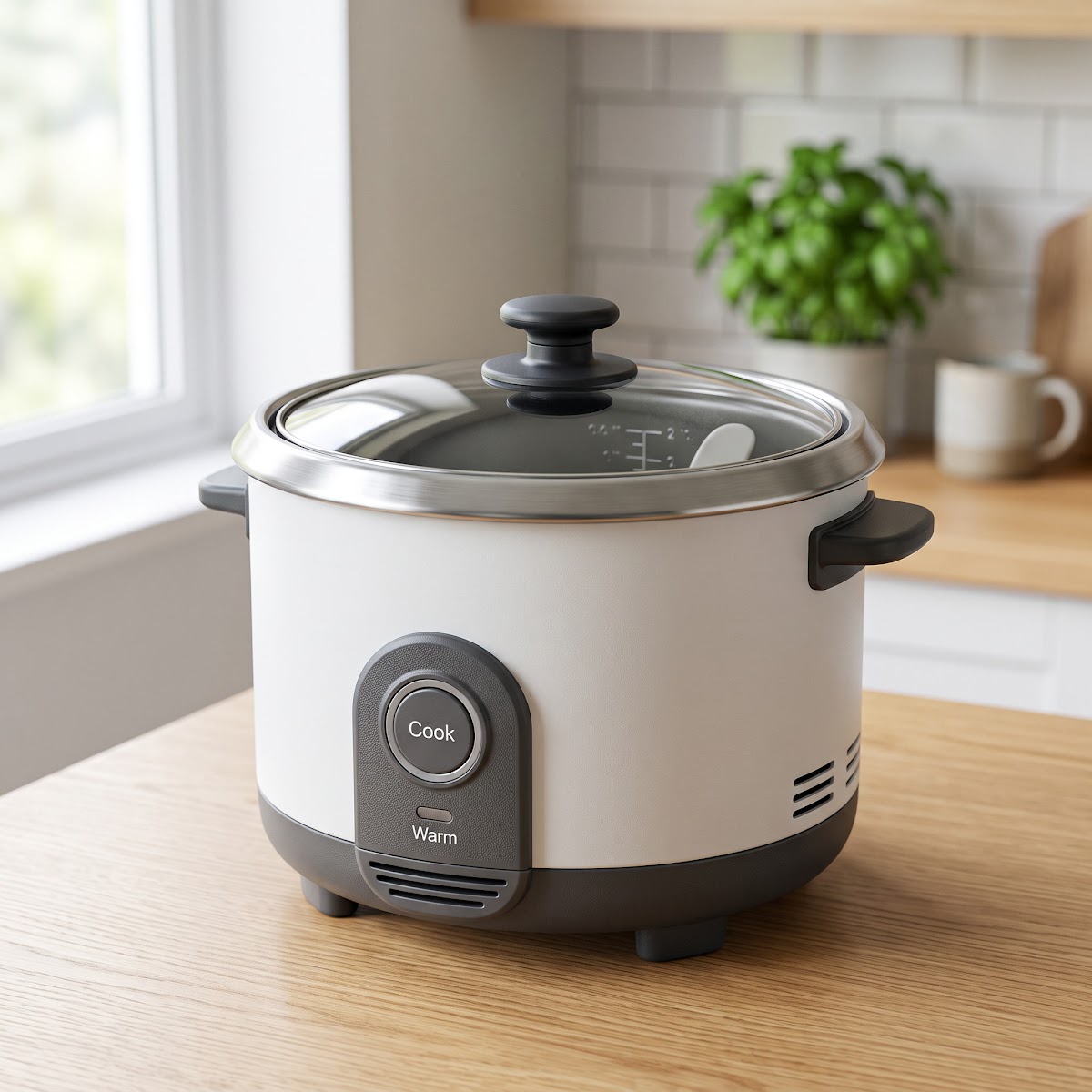
A one-touch cooker reduces the process to adding rinsed rice and water, closing the lid, and pressing a switch. When cooking ends, it usually enters warming mode automatically. This simple operation benefits meal preppers who repeatedly make the same white or jasmine rice recipe and prefer fewer menus.
Check current 6-Cup One-Touch Rice Cooker options on Amazon
Everyday Batch Size
A 6-cup cooked capacity accommodates about four to six portions, depending on serving size. It can supply several lunches for one person or a side for a smaller household. Measure your usual portion first: half a cup may suit a light side, whereas grain bowls often use a cup or more.
Simple Construction and Cleanup
Budget cookers often include a lightweight removable aluminum pot with nonstick coating and a glass or hinged lid. Aluminum heats rapidly but may distribute heat less evenly than thicker materials. Hand-wash the cooled pot with a soft sponge, wipe the heating plate, and remove grains that prevent flat contact.
Pros and Cons
- Pros: Straightforward controls, compact construction, few settings, and convenient daily operation.
- Pros: A glass lid lets you observe bubbling without opening the cooker.
- Cons: Limited programs are less adaptable to brown rice, mixed grains, or customized textures.
- Cons: Basic warming may gradually dry the batch’s surface or bottom.
Who Should Choose This Cooker
This variant suits students, first-time owners, and practical cooks whose meal plans center on one familiar grain. It also works as a secondary cooker while another appliance prepares beans or protein. Seek stable feet, visible fill markings, and a removable condensation collector when available.
Best Premium
8-Cup Induction-Heating Rice Cooker Overview
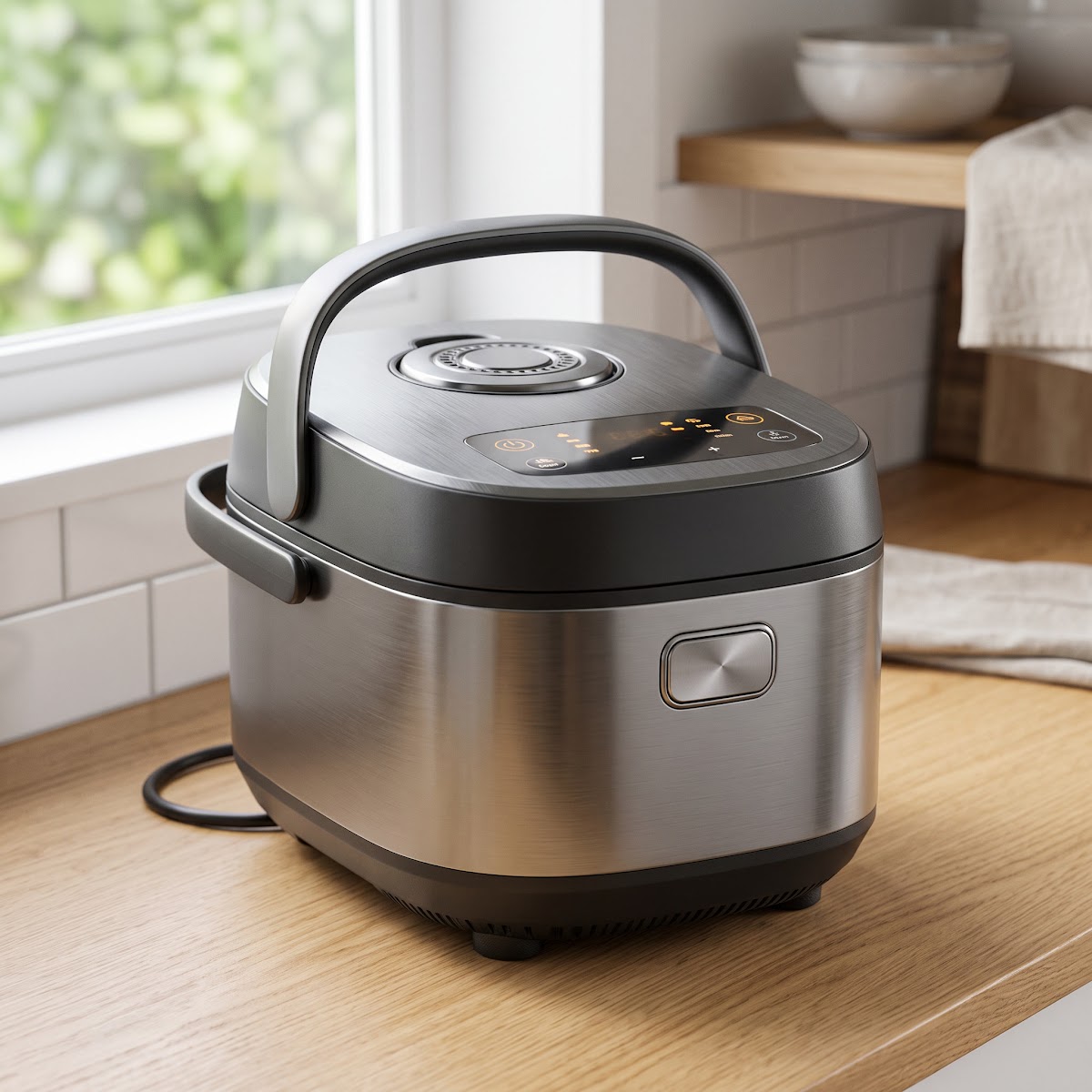
An induction cooker heats the inner vessel across a broader area rather than relying only on a plate underneath. This supports even temperature control and finer texture settings. For weekly meal prep, its main advantages are flexibility, repeatable programs, and scheduling rather than speed alone.
Check current 8-Cup Induction-Heating Rice Cooker options on Amazon
Capacity and Advanced Programs
Eight cooked cups offer a useful middle ground for households needing substantial batches without the largest body. Common premium functions include firm or soft texture selection, quick cooking, brown rice, porridge, delayed start, and extended warming.
Inner-Pot Material and Care
A thick coated pot retains and distributes heat effectively but is heavier to lift. Stainless steel alternatives resist scratches and avoid nonstick coatings, although rice may adhere more firmly. Regardless of material, keep the pot’s exterior clean and dry before returning it to the cooker.
Pros and Cons
- Pros: Broad heating, texture controls, scheduling, and enough capacity for several prepared meals.
- Pros: A substantial pot helps maintain stable cooking conditions throughout a medium batch.
- Cons: Higher cost, heavier parts, and a larger footprint may not benefit occasional users.
- Cons: Numerous modes require manual reading and accurate grain-to-water ratios.
Who Should Choose This Cooker
Choose induction heating if rice appears in most weekly meals and subtle texture differences matter. It can also serve households preparing different grains for varied preferences. Before buying, check open-lid clearance, handle access, cord placement, and the availability of reasonably priced replacement pots.
Best Compact
3-Cup Mini Rice Cooker Overview
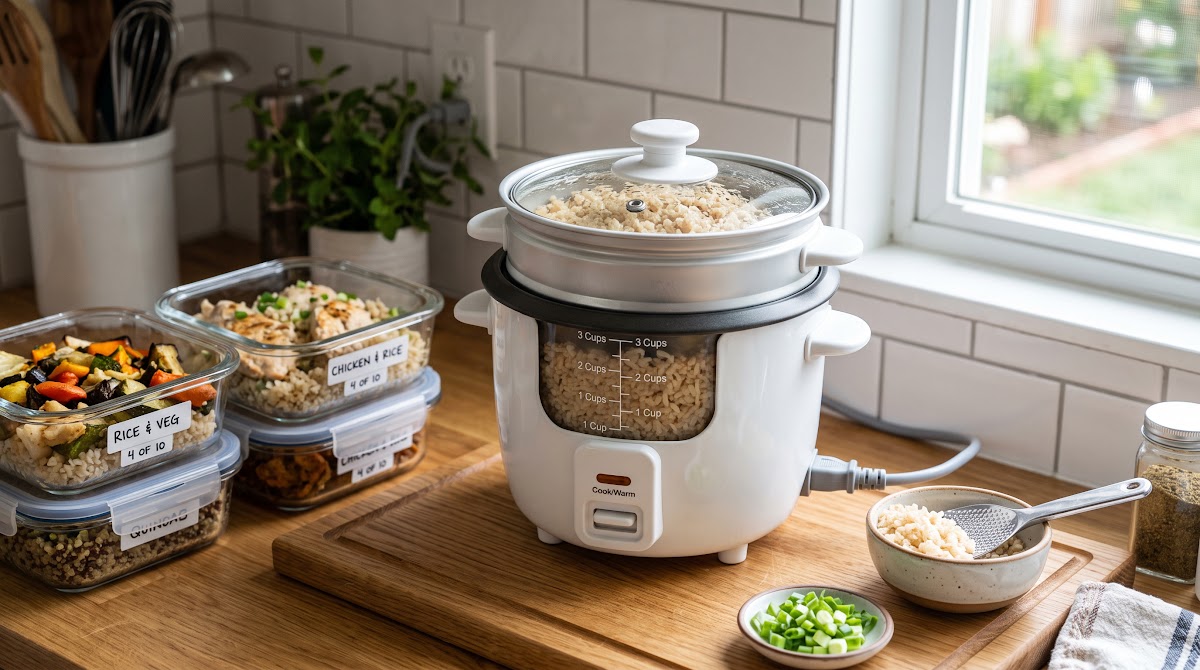
A mini cooker prioritizes easy storage and appropriately sized batches. It prepares rice for a few meals without leaving excessive leftovers. Its smaller pot also cools and washes quickly, making this format convenient when meal prep occurs in short sessions rather than one large weekend routine.
Check current 3-Cup Mini Rice Cooker options on Amazon

Small-Batch Capacity
Three cooked cups generally cover three moderate sides or two generous grain bowls. Capacity labels vary, so verify each manufacturer’s definition. If you routinely need seven cups, repeated cycles may eliminate the compact design’s convenience.
Footprint, Storage, and Cleaning
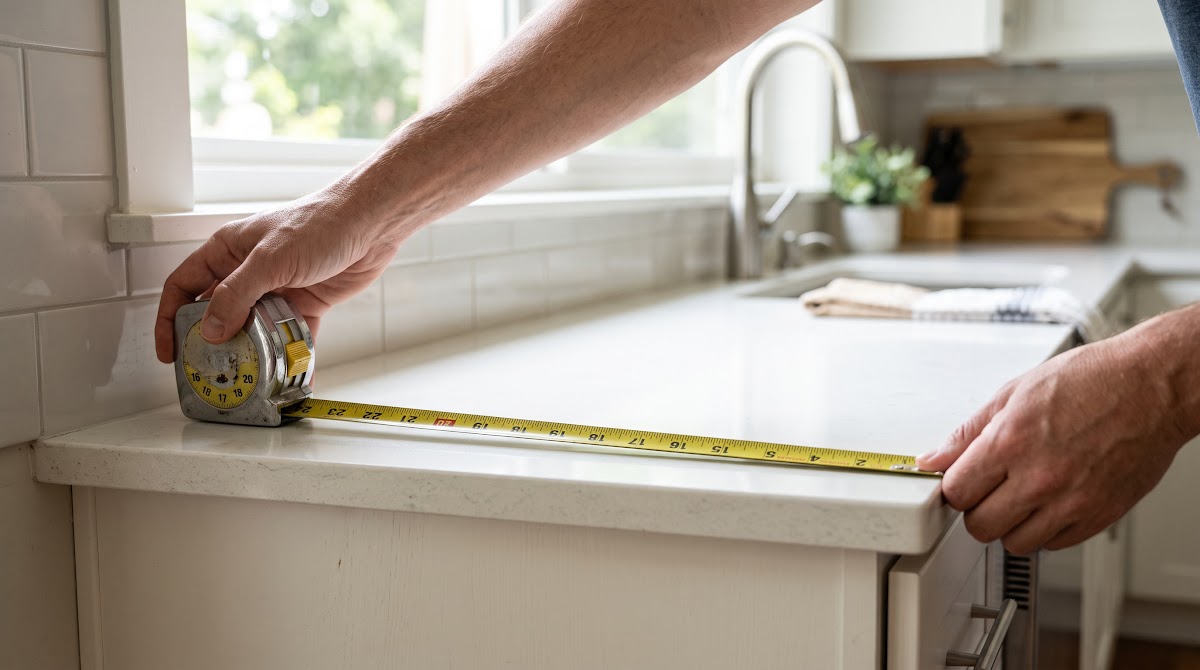
Measure the intended surface instead of relying on product photos. Record width, depth, and closed height, then allow clearance above the vent and lid. Removable pots are easier to wash than fixed vessels. Store accessories inside only after every component is dry and the unit is unplugged.
Pros and Cons
- Pros: Minimal counter use, manageable portions, easy transport, and quick small-batch cleanup.
- Pros: Lower cooked volume can reduce forgotten leftovers and food waste.
- Cons: Limited capacity may require repeated cycles for family meal prep or entertaining.
- Cons: Small pots require precise measurement because slight water differences noticeably affect texture.
Who Should Choose This Cooker
This format suits a single diner, a couple with moderate rice consumption, an RV kitchen, or a dorm where permitted. Check housing rules before operating any cooking appliance. Favor a sturdy handle, nonslip base, legible water lines, and a lid that opens without striking an upper cabinet.
Buying Guide
Match Capacity to Weekly Portions
Begin with the cooked rice your household actually consumes. Multiply a typical portion by the planned meals, then allow modest flexibility for guests or larger dinners. Capacity terminology is inconsistent: one “cup” may mean the smaller supplied measure, while listings may describe raw or finished yield.
Measure the Counter and Ventilation Area
Measure available width and depth, including space for the plug. Record height with the lid open rather than closed. Steam requires unobstructed clearance, so never aim the vent beneath a cabinet, shelf, or moisture-sensitive material. Set the appliance on a level, dry, heat-resistant surface.
Compare Pot and Lid Materials
Coated aluminum is light, responsive, and easy to clean, but it may scratch and wear. Stainless steel is durable and tolerates metal contact, although sticky rice may require soaking. Thick multi-layer pots distribute heat effectively but add weight. Removable inner lids simplify washing, while glass lids offer visibility but become hot.
Prioritize Useful Controls
For varied menus, dedicated programs for white rice, brown rice, porridge, and quick cooking are more useful than obscure presets. A delayed-start timer coordinates breakfast or dinner, while a clear countdown helps sequence other tasks. Check whether settings remain saved after a brief power interruption.
Review Cleaning and Safety Details
Look for a removable steam cap, condensation collector, washable lid plate, cool-touch handles, stable feet, and a cord positioned away from walkways. Unplug before cleaning and never immerse the powered body. Direct steam away from your face, respect fill lines, and refrigerate cooked rice promptly in shallow containers.
Frequently Asked Questions
What Size Rice Cooker Is Best for Weekly Meal Prep?
A cooker producing six to ten cooked cups is practical for many meal-prep households. Smaller appetites may need less, while families may require more. Calculate expected servings and verify whether the listing measures raw or cooked capacity. Matching the cooker to routine volume is better than choosing an unnecessarily large pot.
How Long Can Rice Stay on Keep-Warm?
Keep-warm is convenient during serving but should not replace safe storage for an entire week.
Should Rice Be Rinsed Before Cooking?
Rinsing removes loose surface starch and may create more distinct grains, depending on the variety and desired texture. Use a bowl or fine strainer, then drain thoroughly so residual water does not alter the measured ratio. Follow package directions for enriched rice because rinsing may remove added nutrients.
Can a Rice Cooker Prepare Other Meal-Prep Grains?
Many programmable cookers handle brown rice, quinoa, oatmeal, and mixed grains, but water ratios, foaming, and cooking times differ. Use the appropriate program or manufacturer’s directions rather than assuming the white-rice setting will work.
Final Verdict
For most weekly meal-prep routines, a 10-cup fuzzy-logic cooker offers the best balance of batch capacity, grain programs, scheduling, and manageable maintenance. The 6-cup one-touch style is preferable when simplicity matters most, whereas induction heating suits frequent cooks who value detailed texture control.
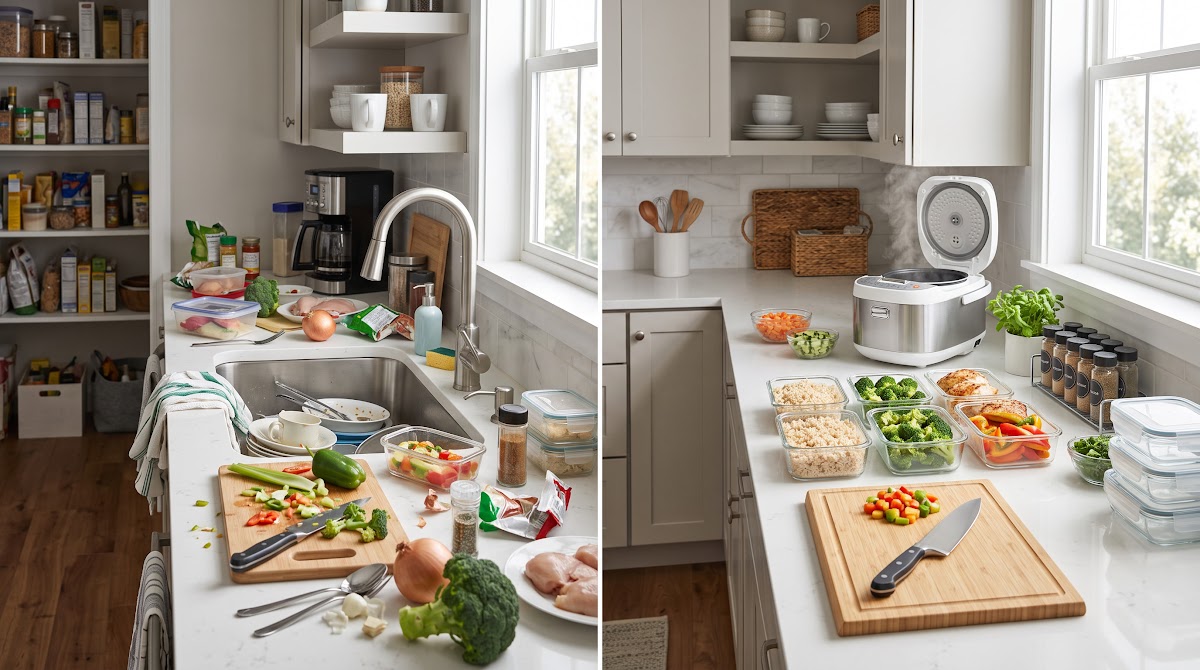
Choose the 3-cup mini cooker when limited counter space and smaller portions outweigh the need for one large batch. Before ordering, confirm cooked versus uncooked capacity, measure the open-lid area, compare inner-pot materials, and ensure removable parts match the cleaning effort you can sustain each week.
0 comments:
Post a Comment